
If you live with PMDD, you have heard some version of the question: “Have you tried yoga?” And if your immediate response is somewhere between exhaustion and rage that makes perfect sense. Too often, phrases like this are offered as shorthand solutions to deeply disruptive experiences — the kind that affect mood, energy, pain levels, self-perception, relationships, and the ability to move through ordinary life. When you are dealing with brain fog, despair, anger, dissociation, isolation, or the familiar feeling of not being fully seen by medical systems, being told to stretch and breathe can feel not just simplistic, but insulting.
But this piece is not about “that kind” of yoga.
It is not about forcing calm, performing wellness, or pretending that a complex condition can be solved by a sun salutation. It is about a slower, more thoughtful, and more compassionate practice — one that can support rest, regulation, self-trust, and reconnection with the body. The kind of yoga explored here makes room for fluctuation, honours cycles, and starts from the understanding that how you feel matters. In conversation with Claire Robinson, we explore what yoga can offer women with PMDD when it is approached not as a cure-all, but as a practice of care, agency, and meeting yourself where you are.
A Practice Rooted in Care
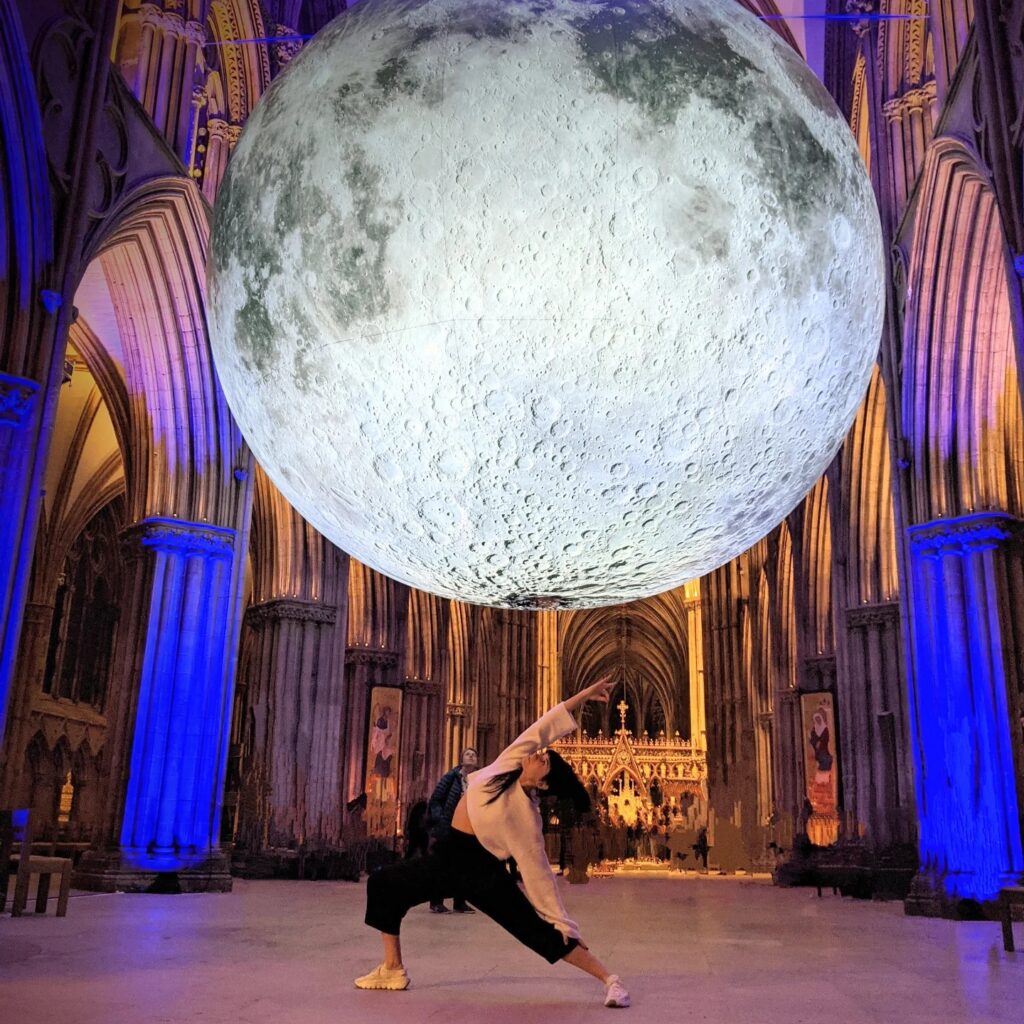
Interview with Claire Robinson – Yogi Claire
Birmingham UK
Interviewer – Kim Cormack, Community Outreach Manager for The PMDD Project
Tell us about your practice.
My teaching style is slow, considered, and creative, with an emphasis on breath, relaxation, mindfulness, and flow.
I aim to create a non-judgemental and inspiring space by offering diverse options for postures and movements, so you feel empowered to bespoke your practice according to your needs on any given day.
My classes not only aim to support your physicality, including alignment, balance, posture, and health, but also interweave traditional breathwork, mudras, mantras and meditations, promoting presence, mindfulness, self-awareness, and focus.
I believe that this is key to a holistic and authentic yoga practice and set this ancient past time apart as a moving meditation, rather than a purely physical workout.
My greatest source of inspiration is nature, especially the seasons, cycles of the moon and trees.
By imparting this wisdom of the natural world, I aim to offer a more enriched and holistic practice, beyond the physical, helping you feel more connected and in harmony with yourself and the world around you.
I also love to share the ancient philosophical aspects of yoga as a means of allowing your practice to transcend the yoga mat and extend into your daily life.
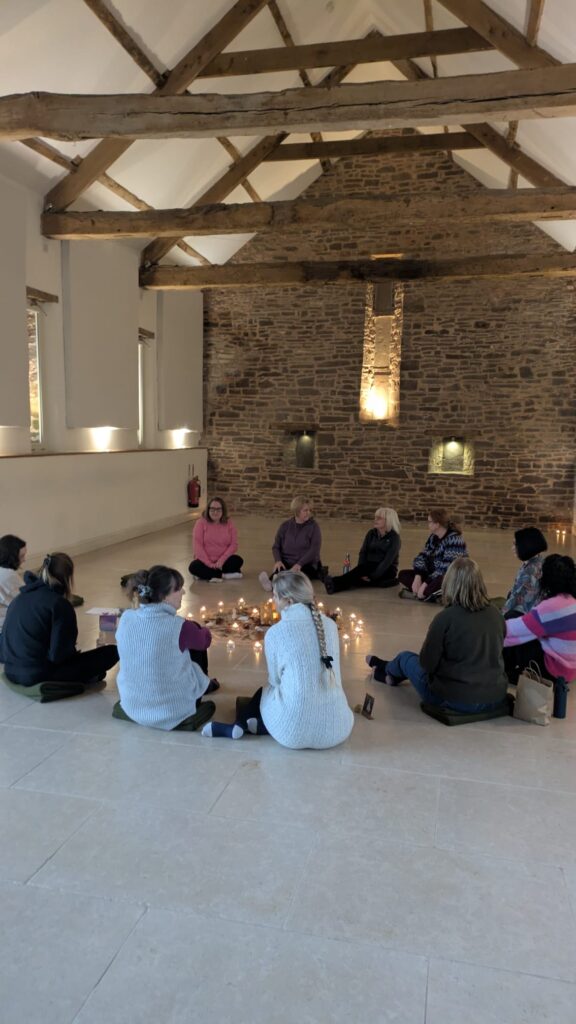
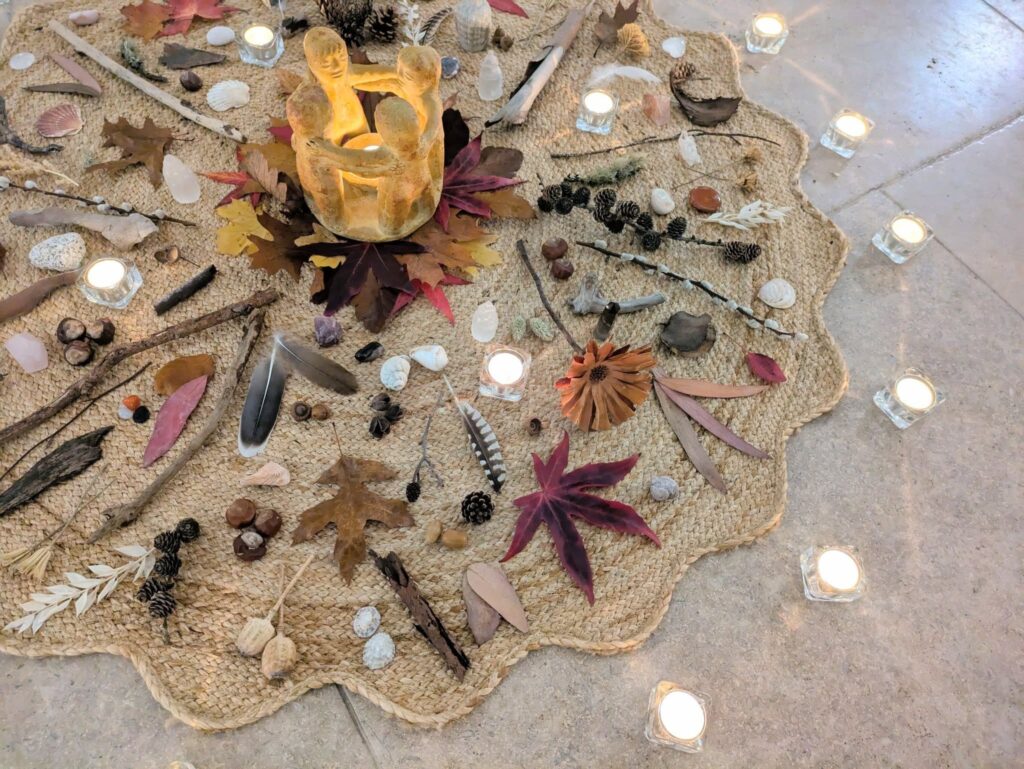
In addition to yoga, I also offer monthly sound baths and women’s circles at my home studio, Luna Moss.
You can check out Yogi Claire’s Events & Retreats HERE.
What made you want to pursue this field of work?
After experiencing such a profound and positive change in my outlook on life and mental health through the practice of yoga, I decided to embark on a quest to share this precious gift with others. It just felt like something I had to do, like answering a call!
“In the west there is this strange, warped and somewhat sad belief that yoga is for calm, bendy people and I try so hard to dispel that myth.“
How long have you been doing this?
I have been teaching yoga since September 2018. I began sound healing in January 2025 and opened my studio in January 2026.
What training have you done?
I trained intensively in Portugal withIndiv Yoga to gain my 200-hour qualification. This was one of the most wonderful, memorable, and enriching experiences of my life!
I have also had additional training in Yin yoga, restorative yoga, yoga Nidra, ‘Teaching Yoga for Stress, Burnout + Fatigue’, ‘Creative Sequencing’,’ Assisting + Adjusting,’ “The Language of Yoga” and “Integral Sound Healing”.
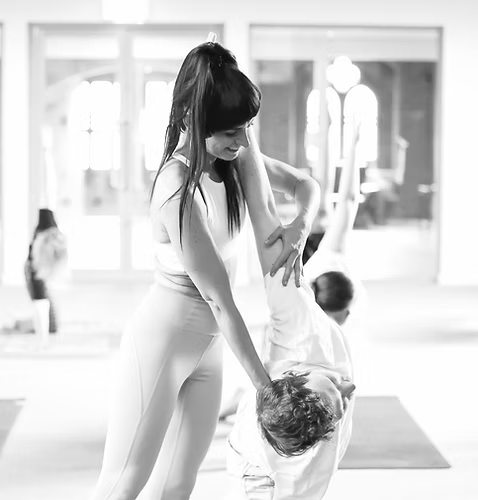
To whom do you tailor your work? What makes you a little different?
My aim is to offer an inclusive space to everyone from all walks of life, ages, and experience of yoga. I do not believe in “levels” or physical advancement being the sign or goal of a seasoned yogi and see yoga as a truly flexible form that can adapt with us depending on our mood, energy levels, or situation.
What I love more than anything however is hosting day and weekend retreats for women. This is the most hearted and integrated work I do. Each retreat is inspired by nature, the seasons and moon, and offer a brave, inspiring, and empowering container for women of all generations and backgrounds to come together and honour and celebrate who they are.
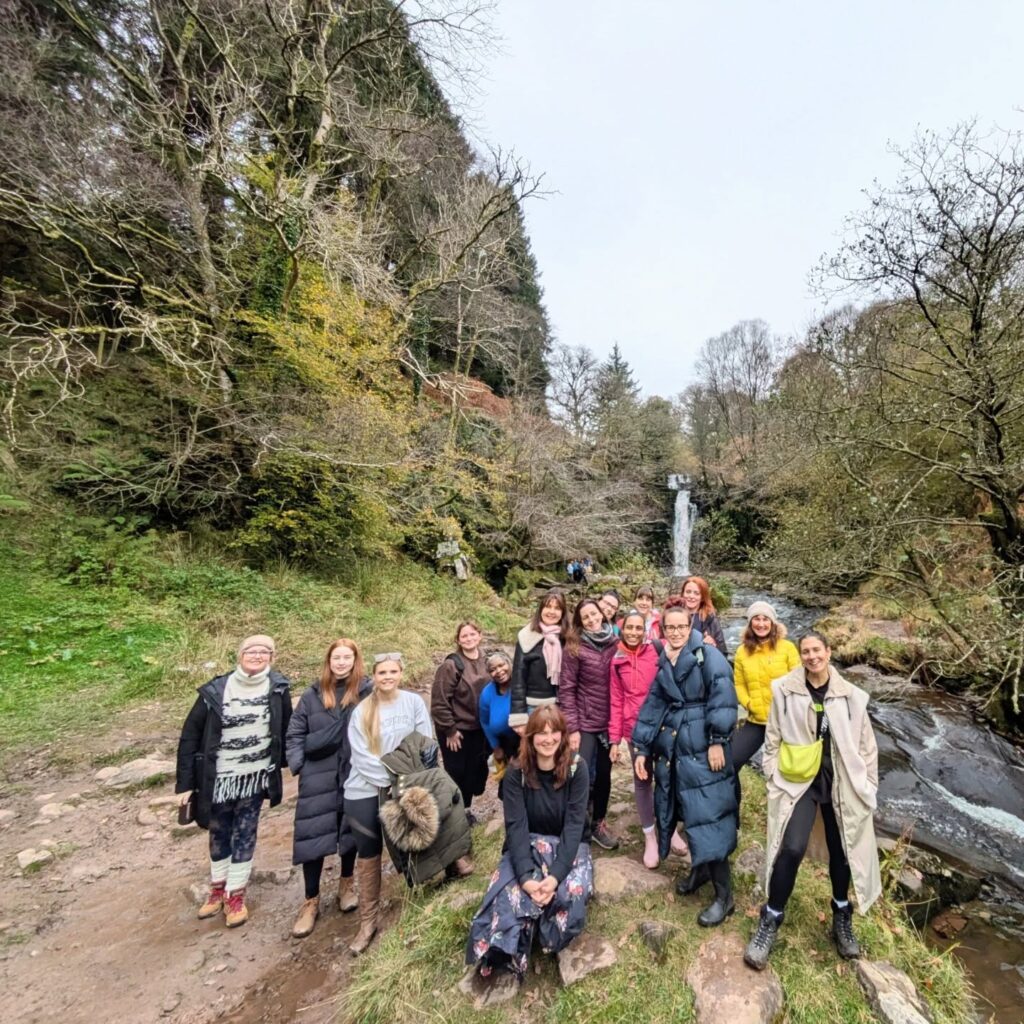
These experiences are immersive and thought provoking, creating a unique, holistic, and shared experience within each group I host. The sense of sisterhood that develops in such a short space of time is so profound when we are stripped of responsibility, expectation, and requirement, and allow ourselves to be held in our entirety. At my retreats all of YOU is welcome.
“I think society has stitched us up as women.“
More Than Stretching: What Yoga Really Is
In your experience and opinion, who can benefit from Yoga?
I believe everyone can.
Why is that?
In the west there is this strange, warped and somewhat sad belief that yoga is for calm, bendy people and I try so hard to dispel that myth. Yoga does not even need to be anything physical as it is a practice of the mind. The movements are just one of money methods of creating a connection with self. So, anyone with a mind can practice and benefit.
Also, the longer I practice yoga, I see it less as something I “do” and more a state of being, so some days going to a yoga class is my yoga, other days it’s reading a book or watching friends on TV all afternoon or having a nap. Sometimes it is helping someone in need or a random act of kindness. Anything can be your yoga when done with intention and connection.
Can Yoga Support PMDD?
Do you believe that practising yoga has the power to help women who suffer with PMDD? Specifically with the following common symptoms:
– Brain fog
– Severe depression
– Dissociation from body/Dysphoria
– Feelings of isolation
– Feelings of being “unseen” or “gaslit” by experiences of medical misogyny.
– Cramping
– Migraine
– Anger
I do. Although yoga is not a definite cure all or substitute for medical attention or therapy, it could certainly contribute to alleviating or navigating these sorts of symptoms. Yoga can help give space and clarity to so many feelings and situations. It is time that you dedicate to yourself and show up for yourself whatever is going on for you. It can help focus the mind, balance, and harmonise the nervous system and connect with the wisdom of the body in the moment.
It is also an opportunity to find connection and kinship in community. Finally, when taught conscientiously, yoga should empower you to take agency over yourself and connect with your bodily experience more deeply.
Practising with the Cycle
Are there specific types of yoga you would recommend for PMDD warriors in general/before luteal phase/during luteal phase?
It would entirely depend on the individual and their unique symptoms. I would probably suggests avoiding really strong, competitive flows and either focus more on slower flows that help to ground and connect with the body while energising you, or more restorative practices like yin and yoga nidra which offer a more restful, introspective experience of being rather than doing. Again, rather than used as an alternative, these methods could support and compliment additional prescribed remedies.
“Sometimes the challenge is acknowledging you are a little burnt out and it would be more beneficial to choose a more ground, restful posture than something really strong and stretchy.“
Words, Poetry, and Inspiration
You quote a lot of poetry and even song lyrics in your sessions. For me personally, the always seem to resonate. Where do you get your inspiration?
All over! I have dozens of poetry books, I follow poets on Instagram and trust the most fitting resources will find me when the time is right, which they more often than not do. However, I am constantly reading, researching, exploring, building on, and contemplating the themes and concepts I work with.
Recommendations for further reading (yoga practice or poetry etc).
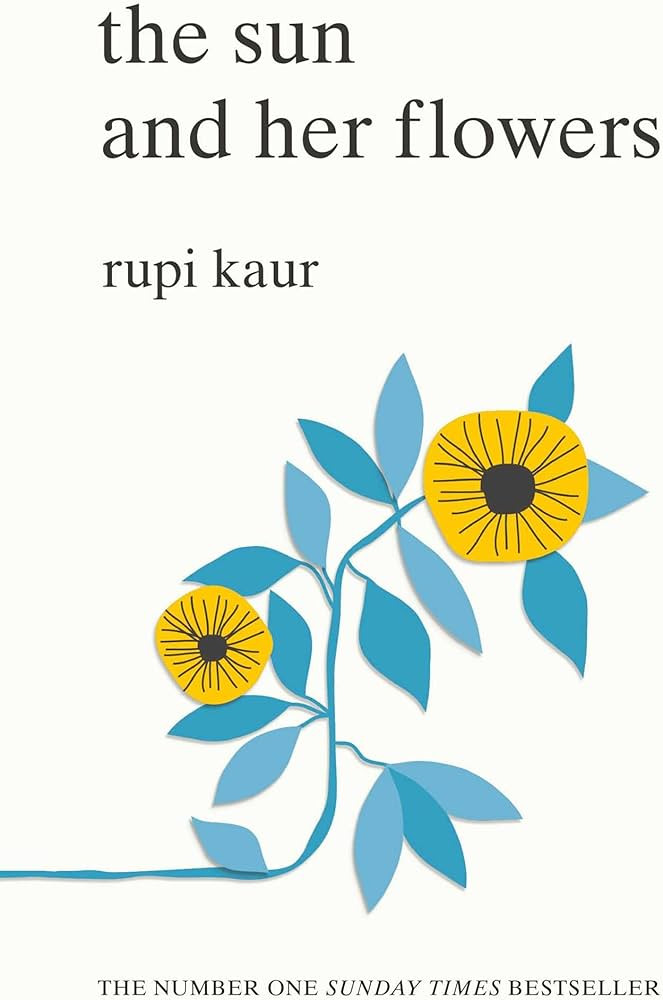
I recommend Rupi Kaur poetry books for some female empowerment and self-acceptance. Also, the works of Mary Oliver and Dana Faulds. Wild power is an excellent resource for learning more about your cycle.
Meeting Yourself Where You Are
A phrase that has stuck with me from one of your sessions is about “Meeting yourself where you are.” What does that phrase mean to you?
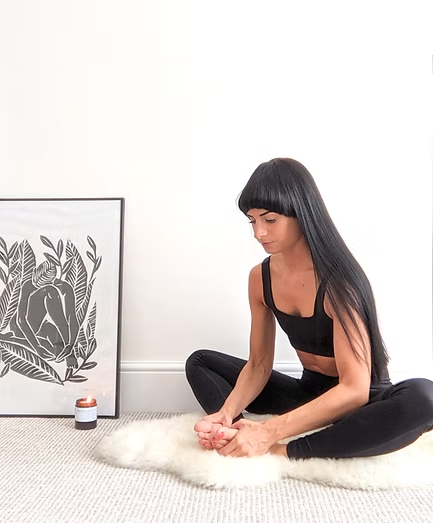
In terms of yoga practice it is an invitation to attune to and accept where you are at physically, mentally, emotionally, energetically and bring that into the choices you make during your practice, rather than simply going through the motions on autopilot, always choosing the strongest stretch because you seem it better or more advanced, or you might miss out if you don’t do it. Sometimes the challenge is acknowledging you are a little burnt out and it would be more beneficial to choose a more ground, restful posture than something really strong and stretchy.
What is a common misconception about practicing yoga?
Again, this preconception that yoga is for calm bendy people. It makes me so sad when people say this to me, that they are not calm enough or bendy enough to do yoga, as I wonder how many people are missing out on yoga because they believe they “can’t do it” or they won’t fit in. To me it is far more valuable to be flexible and open in mind than in body and in yoga that needs to start by dispelling these myths and limiting beliefs.
The Power of Women Practising Together
You run some yoga retreats for women throughout the year. This Autumn, I had the honour of taking part in your Rested Goddess retreat in the Brecon Beacons. For me, it was a real turning point in my relationship to my body and trauma. Why do you believe it is so powerful to have a group of women together experiencing Yoga and other rituals/exercises?
First of all, I am so thrilled to hear how hugely beneficial the retreat was for you, and I am honoured to have been a part of that healing journey. This is exactly why I devote myself to this work!
I think society has stitched us up as women. We live in a patriarchal world that does not give way for the more nuanced, cyclical wisdom of women. We feel we must conform to certain paths, rules, beliefs, and restrictions that others put upon us, and if we do not, we are deemed awkward, outspoken, high maintenance or an outcast. I feel this sets women against each other.
I aim to create a space which offers an antidote to that, where we can reconnect with our roots, our power and wisdom, as well as a sense of sisterhood and lift each other up without judgement or doubt. A space where we can find our tribe and learn from each others wisdom. One way I facilitate this is through my monthly women’s circles, where the group holds space for each to share themselves however they wish without intervention. It is so magical to witness the potential magic that comes from being so open and unguarded when we feel utterly held and safe within a supportive community.
I see from your lovely website (seriously, it is the most Zen website I have seen), that you have an on-demand library of pre recorded sessions.
As someone who struggles to consistently attend Yoga as I would like to due to PMDD etc; are there any Asanas (Poses, postures), breathing exercises etc that you would recommend for these difficult episodes? (Nadi Shodhana?)
Thank you!
Absolutely. Yin practices and moon salutations can help bring the nervous system into rest and digest, while being fairly low impact on the body, focussing more on rest and conserving energy and regulating the nervous system. Yoga nidra could help to bring more awareness and acceptance to the body while alleviating heightened emotions and lack of sleep.
A Few Final Words of Wisdom
Three bits of wisdom you wish all women you could hear/read right now.
1. Rest before you need to.
2. Disconnect to reconnect (i.e. switch off your phone for a bit and focus on you! See how much more time you have and how much more you notice)
3. Community and connection are key, whether in yoga, sharing circles or your daily life. Yoga is connection!
Bonus fourth one: Do not wait to be “ready” to start a yoga or spiritual practice, or book that retreat. We can always find something else to do or prioritise, or a reason we cannot or should not do something, and often the hardest yet most rewarding part of the practice is the showing up.
You can follow Yogi Claire on social media:
adhd april birmingham blog bodywork books charity complementary medicine dog donate events feminism fundraising grief handmade health holistic hormones iwd kristina goodsell livedexperience london love mafs massage medical misogyny menstrual mental health periods pmdd prostap puppy rupi kaur somatic spring support therapy unknown unmasking wales wellbeing woman women womens health womenshealth