
Unmasking PMDD : Finding hope through grief
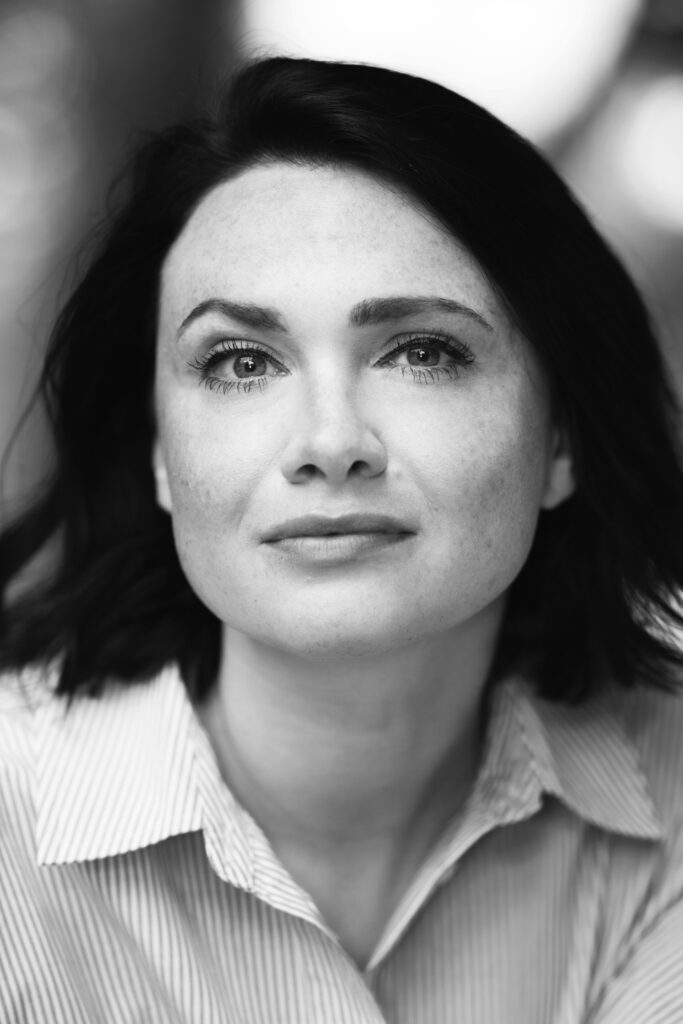
Hi there! I’m Kim and I am the Community Outreach Manager for The PMDD Project – the first UK charity to focus on PMDD. As well as supporting this incredible charity, a lot of my time is spent managing my various health conditions. As anybody with any chronic illness and/or neurodiversity will testify… being “different “is a full-time job! The admin, the hidden costs… DON’T. GET. ME. STARTED.
You can read about some of my experiences with PMDD HERE. or watch me on This Morning HERE.
Feeling vulnerable
“Finding hope through grief”… just the title makes me feels a bit…odd. If I sit with that feeling, I come to recognise that “odd” is my old friend vulnerability and therefore REALLY FRIGGIN’ UNCOMFORTABLE.
I ask myself why. Why is talking about hope and grief with PMDD such an uncomfortable subject? Reflecting on it, I guess there’s a few reasons:
- Toxic positivity PMDD and grief are NOT a positive experiences for any of us. In contrast, hope is a fundamentally positive thing. When I have been struggling or in the midst of a crisis (in general, not just with PMDD), and have been offered well- intentioned but empty affirmations or advice it has made me feel dismissed, invalidated, misunderstood and ultimately makes what I am going through so much harder. I feel even more isolated and hopeless. I DO NOT ever want to be the source of that for someone else.
- Imposter Syndrome & RSD: I am fully aware that I experience both of these (and awareness plus years of therapy has helped tremendously) but despite understanding where these feelings come from and having tools to confront the thoughts and feelings they bombard me with, it doesn’t stop them from wreaking havoc in my day – to day life. Who am I to give advice to anyone? The fear that when I share a part of myself I will be misunderstood, that to be a fraud and ultimately, rejected has inhibited so many aspects of my career, relationships, education and happiness. *
So, for the sake of this entry of the Unmasking Diaries and my own intrusive voices, let’s agree on the following:
I do not need to be a medically trained expert to be an expert in my own experience. (This goes for you too).
I can offer insight and my own observations, drawn from personal experiences and those I have gained from working with The PMDD Project. They may not apply to everyone. But I passionately believe that, whilst the medical world (well, world in general) plays catch up with PMDD, we need connection with our peers more than ever.
This was confirmed again to me recently when I took over The PMDD Project’s peer led Support Groups initiative; in a short space of time we have been inundated with hundreds of people across the UK wanting to meet, connect and identify with other PMDD warriors.
If you would like to join a PMDD Support Group near you, or receive training and support to become a local PMDD Support group Lead:
Grief in western Society
Deep breath, kim…
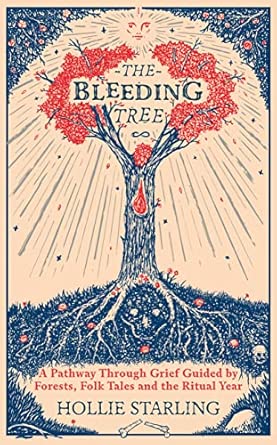
A couple of years ago I read a book that changed my life. The Bleeding Tree* by Hollie Starling is a remarkably honest and fascinating exploration of the rituals, folklore, mythology and processes adopted the world over, throughout history to “cope” with grief. Specifically, Starling looks at grief following the death of a loved one. And I suppose, looking back that was what made the book leap out at me at my local bookshop. I have always been fascinated by folklore and mythology; exploring wisdom, ritual and cultural influences throughout history. This fascination took on a more spiritual and deeply comforting role for me after my Nan, Pat (or Nana Baggins) passed away in 2017.
My Nan was (and still is) a huge part of my life. A connection with a kindred spirit that I feel so incredibly blessed to have experienced. I could talk about her all day, to whoever would listen, but suffice to say that I have never truly stopped grieving her loss. She was my rock, anchor, my best friend and, at times, my entire family. We truly saw each other.
I had pretty much accepted that I would never truly stop grieving for Nan when I found The Bleeding Tree. The book offered me sanctuary as it affirmed what I had observed in the aftermath of Nan’s death. Folklore and cultural traditions offered me solace in the face of a distinct lack of ritual, process and even acknowledgement of grief in our modern day, western society. In the UK, we may have come some small way in accepting grief following the death of a loved one; most of us have, for example, heard of Swiss- American Psychologist Elisabeth Kübler-Ross’s five stages of grief: Denial, Anger, Bargaining, Depression and acceptance.
Frameworks and rituals have an uncanny ability to comfort us as human beings when we experience those big, overwhelming life events. Sometimes it’s due to us needing scaffolding to hold onto whilst we re-find our footing on unknown territory or new reality. The problem with a lot of western (especially British) socially acceptable frameworks for grief is this idea of “the stiff upper lip.”
We rarely see condoned periods of grieving. Most of us have only seen this for members of the royal family but even there, the 19th Century’s Queen Victoria grieved her husband Albert for an unfashionable 40 years after his death. Even for a queen, it seemed particularly self indulgent and socially taboo to express her grief in this way.
Again, I could go on about this forever… but I digress…
In a society where the expression of grief, even following the death of a loved one, is still somewhat taboo and uncomfortable… is it any wonder that we conceal the grief we experience following other kinds of loss?
As we embark on a journey of unmasking together, I want to create a space for you where we eradicate this “socially acceptable hierarchy of grief”; an opportunity to start to acknowledge to ourselves what chronic illnesses like PMDD take from us. A safe place to reflect, feel and process for ourselves, before we even think about how to unmask this part of our experience to others.
It’s ok, I got you.
Grief & PMDD
For me, and perhaps many of us with PMDD and other conditions which affect our ability to regulate our moods, it feels dangerous to allow myself to think of what might have been. I fear that, unless I am in a good place (not in luteal), allowing myself to think about such things will trigger a downward spiral that can bring on extreme depression, dysphoria and suicidal ideation (or worse).
With this in mind, please make sure that you are in a safe place emotionally and physically when reading this.
“Is it normal to feel this angry? Like, thinking of what might have been?”
I had turned to my elder sister via WhatsApp, hoping for some validation. It was late 2024 and I had recently received a diagnosis of ADHD. In the preceding few years, my sister, mother, nephews and niece had also had their neurodivergence confirmed; a neurofunky clan of abbreviations soup.
“OMG. Yes. Yes, Kim. It’s normal. I’m still processing it all.” Came the reply.
Two years later, I know that I am also still processing it all. As one of the hundreds of thousands of women in the UK to receive a diagnosis of ADHD and/or Autism in their 30’s (as opposed to men who are statistically more likely to be diagnosed in their school years), I realise that I am late to the party. I realise that I have ALOT of unlearning to do; deeply engrained masking mechanisms that I adopted in childhood in order to survive, aware of but not fully comprehending this all encompassing feeling of “otherness.”
Following this new diagnosis, I discovered the recent research into the links between ADHD and PMDD. The prevalence of comorbidity was undeniable, with some studies suggesting that women with ADHD are up to 3 or 4 times more likely to also have PMDD. The interplay between the two, plus ACEs and trauma, was overwhelming…and weirdly reassuring; there are answers to why I feel and behave the way I do. I am not crazy.
It occurred to me around this time that the term “Unmasking” , which was E.V.E.R.Y.W.H.E.R.E in the neurodiverse stratosphere of literature, media and social media, was not being applied specifically to PMDD when it really should be. I was diagnosed in 2021 with PMDD, but it was only following the ADHD bombshell that I began to tap into address the impact that both conditions had had on my life.
The “What ifs”
I think everyone at some point must have a sliding doors moment. We naturally wonder what might have been if such-and-such hadn’t happened. That’s true of everyone, regardless of whether they have PMDD, ADHD or any other condition. As above, in western society we have historically been instructed not to waste time on such ponderings; like comparisons, they are the thief of joy.
But, if we are honest, the grief we feel when we consider what we have lost or could have had/been still lingers. PMDD has an insidious habit of latching onto our grief, anger and trauma and magnifying these feelings to an unbearable degree, it warps, twists and attacks us at our most vulnerable, softest areas. PMDD, in fact, laughs in the face of empty advice like “don’t waste your time thinking about it.” We would stop if we could, right?
For me, though it’s impossible to always pin down specific events as being directly caused by one of my conditions, I wonder how the following would be different if a). I did not have these conditions, including PMDD, b). If I had been diagnosed in earlier life and/or c). If there had been appropriate support, treatment, awareness and adjustments made at an earlier stage:
- Would I have had an easier time in education?
- Would I have found it easier to maintain friendships and relationships? And therefore, felt less alone.
- Would I have quit that job?
- Would I have achieved my career goals by now?
- What would my life be like without having to rebuild and start over all the time?
- Would I be more confident, successful, happy?
Thinking about specific events related to these questions, even now, brings tears to my eyes. I think of younger versions of myself; the hopes for the future and the obstacles they faced. I am filled with sadness and anger and protectiveness of those younger versions of myself who were struggling in the dark.
Grief & Anger : If you aren’t angry, you arent paying attention.
If there was a hierarchy of socially acceptable grief, then there’s definitely an unsaid hierarchy of socially acceptable symptoms. Though, I want to make a clear distinction between the low mood and anger we experience as symptoms of PMDD (which we will explore in a later Unmasking Diary entry), and the low mood and anger we feel as a natural part of the unmasking process. The former is the result of the brain’s abnormal sensitivity to normal hormones, the latter is a rational response to new information.
Sadness and depression, whilst still excruciating, concerning and life threatening, is still a more palatable symptom for society to contemplate than anger. On a evolutionary and, indeed, rational level (see : the news, everyday), it makes sense that human beings have a complex and fear-informed relationship with anger. Anger is to be feared because it is deemed irrational, uncontrollable, all consuming and dangerous. It makes sense.
However, much like our western ideas about grieving, our attitudes towards anger need to evolve and become more nuanced. Especially when it comes to women and anger.
Ok… don’t get me started.
Anger has historically been accepted as a predominantly masculine experience and behaviour. We have all heard stories of young boys being encouraged to “stand up for themselves” and if someone punches them or disrespects them, to punch back. Whereas many of us can recall a post #metoo childhood where it was “unladylike” to fight and if a boy physically or verbally assualted you in the playground they probably just fancied you. The “Angry woman” is still dehumanised, debased and ridiculed even now. With all progress, we take two steps forward and one step back. (See : the manosphere).
But we had and have the right to be angry. Indignant. Furious. To stand up for ourselves.
In terms of PMDD and women’s health in general, we have ALOT to be angry about.
I was relieved beyond measure when I was finally given the diagnosis and treatment for PMDD. This relief was matched and countered with uncharacteristic (for me) fury when I started to realise just how limited awareness, research, treatments, life choices and support was for me and others with PMDD.
At my first consultation with my wonderful Gynaecology consultant, he explained that (much to his own vexation), PMDD was still relatively unknown to most medical professionals, let alone the many other parts of our society that should, in theory, support someone with a disability/chronic illness. He told me that, in his opinion, we were only just catching up with Menopause, that conditions like Endometreosis and Polycystic Ovaries would then become more widely understood, but that PMDD is atleast ten years behind that.
Have you ever cried with anger? I have.
Statistically, women make up over half of the population. Scientifically, all humans (including medical professionals, research funders and the government) originated from a woman. Socially, we all know and/or care about atleast one woman. In today’s modern world (though feminism still has a way to go), women can be your boss, prime minister, doctor, teacher, care giver… society would implode without women who are able to function.
So why has research into women’s health been so scandalously underfunded? Why hasnt this been more of a priority? Medical misogyny is an ugly beast when you are confronted with it. This realisation is part of getting a diagnosis and learning to manage it. It’s part of unmasking. It’s what motivates me with my work with The PMDD Project.
I am here to tell you that anger isnt a dirty word. You are right to expect equality and hope. It’s rational and I am there with you.
Learning to love yourself in times of struggle
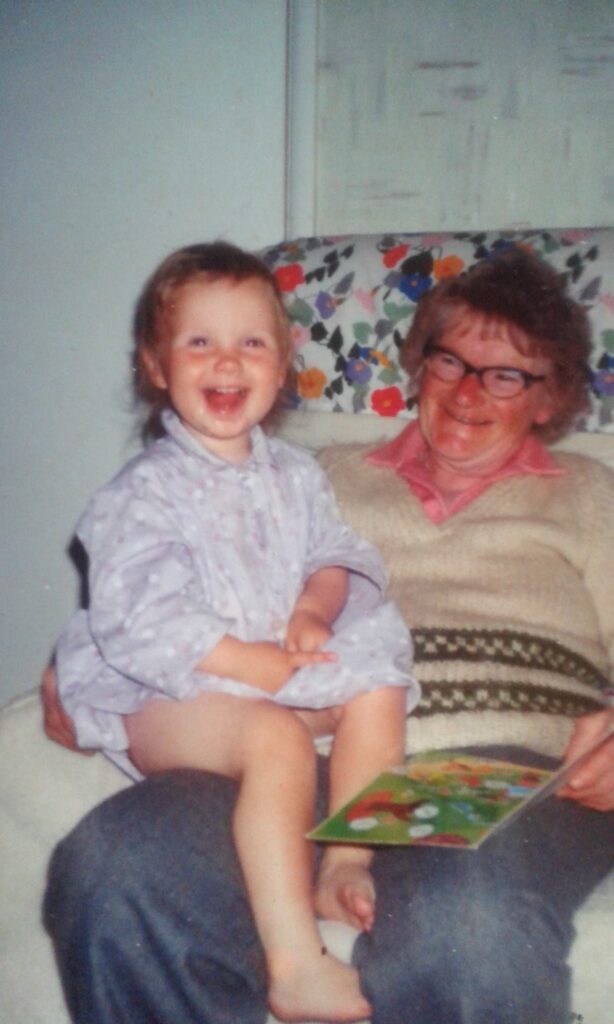
In 2018, I started working with a therapist (one in a long line since I was 14). Though the sessions focussed on my CPTSD and I did not know then that PMDD and ADHD played a role in my life, we did a lot of work on the inner child. I can’t help but think of my Nan when I think of little Kim.
Nana Baggins was a fiercely loving, protective and compassionate mother figure. As a child and as an adult, she would “hold space” for the sadness, heartbreak, joy, self doubt, anger and future hopes, all in equal measure. In therapy, I learned to see myself (both now and as younger versions of myself) through the eyes of my nan. Through the eyes of love.
She would’nt tell (present) me I was being self indulgent or foolish for the “what ifs”.
She would’nt dismiss my feelings of grief or sadness.
She would sit with me in that space. She would listen. She would empathise, console, validate.
Through her unrelenting love and wisdom, she would allow me to feel whatever I need/needed to feel and in the process, make sense of the world and find hope.
The Unmasked Grief
Grief and anger, like other aspects of unmasking that we will explore together this year (2026), can make us feel generally uncomfortable (to say the least). Being honest about how we experience these feelings (to ourselves first and foremost) is the place to start.
Allowing ourselves to be vulnerable, uncomfortable and raw when addressing difficult stages of the journey can be terrifying, draining and just plain old shitty at times. But it’s in and through those shitty times that we can learn, gain perspective, wisdom, new coping strategies and grow.
When I was reading the aforementioned book The Bleeding Tree, I felt an overwhelming sense of connection and being seen. This wasn’t just because the author was talking about folklore which I loved, or was able to balance “morbid” pathos and humour in a way I could relate to. By poking her head above the parapet and daring to talk so openly about a topic such as death which , as we have discussed, makes most of us uncomfortable… she was allowing herself to be vulnerable.
I was and am so incredibly grateful to the author of that book for being so courageous.
Like many of us with PMDD, I have experienced suicidal ideation, suicidal planning and attempts. It’s a darkness that still scares me even though I have found ways to keep myself safe. That book plus the right therapy/support and connecting with other PMDD warriors, has given me the permission and safe space to look at what I fear most and manage those fears in a healthier way. It has given me the strength to be vulnerable and get comfortable with the uncomfortable. In a very tangiable way, it has provided me with facts that even PMDD can’t deny when the dark times return; I have survived everything so far, that’s a strong track record.
Unmasking with pmdd : get comfortable with the uncomfortable
In Entry One, we explored what unmasking means to you. For me, Unmasking is an ongoing journey which I have consciously dedicated myself to so that I can live a more authentic life, experience true joy and learn accept myself.
I know that “fridge magnet psychology” doesnt work for me; the issues are too complex for a temporary plaster.
I know that avoiding, consealing or masking has not worked for me. Yes, I have survived thus far. But I want more than mere survival. I want connection, authenticity and hope.
I know that my loved ones want to support me, but dont know how. I know I can not tell them what I need or allow myself to be vulnerable with them when I havent started to do the inner work for myself.
As I navigate all of this, I keep my Nan by my side. Her lasting legacy is one of love which I want so much to share with anyone reading this. You are not alone.
Before I share some exercises for you to try and recommendations, here’s some advice that I wish I had known/taken more seriously before starting this journey of self discovery:
- Be kind to yourself as you learn to allow yourself to be vulnerable and honest. Make sure you are in a good headspace, have your grounding kit to hand, take time to rest and reach out if you need support. Stay hydrated. Kindness isnt just for others, it’s a neccessity for yourself.
- Connect with nature. I have found so much peace and reassurance when I have been able to tap into nature; woodland walks, hikes, mindful walks, sitting by the sea etc. There’s a universal comfort to be found in the cycles of the natural world.
- Stay curious and open. You may surprise yourself.

Recommendations
Therapy
I have tried many types of therapy with many different therapists, these are the techniques that have helped me the most:
CBT : Cognitive Behavioural Therapy
DBT:Dialectical Behavior Therapy, a structured form of psychotherapy designed to help people manage intense emotions and improve coping skills.
EMDR : Eye Motion Desensitization and Reprocessing technique.
Lifespan Intergration Technique : Lifespan Integration (LI) is a gentle, body-based psychotherapy that uses memory recall and imagery to resolve trauma and repair attachment deficits across a person’s lifespan.
Trauma informed speaking therapy
Somatic Massage / Somatic Therapy: Somatic therapy is a body-centered therapeutic approach that helps individuals process trauma, stress, and difficult emotions by focusing on physical sensations and the mind-body connection.
Futher Learning:

Exercises:
Journalling exercise
- When starting this exercise, I find it really useful to be in a quiet space and to have something visual which grounds me. For me, that’s a framed photo of my nan, a candle etc. This should be something that instantly grounds and centres you when you focus on it.
- In your journal or notepad, create a table with three columns (or put the title of each column on a seperate page if you wish, I just find it easier to reflect when all the info is on one page).
- Put the following titles (or your version of them) in each column: I am grieving…, Lessons & Observations, Wisdom.
- In column one, note down the “what ifs”, the losses, the curveballs and heartaches. This is your space to be honest about what you feel PMDD has taken from you, how it has affected the trajectory of your life, how you feel about it.
- Take a breather and do some grounding exercises if step 4 brings up particularly difficult feelings. You can always come back to this exercise when you are feeling more regulated or even do it with a trusted friend. Needing a break doesn’t mean failure, in fact, it’s the opposite. Knowing what you need is a sign of true wisdom.
- In column 2, write down what you observe about your entries in Column 1. How does it feel? Do you feel it in your body? How do you behave? How has this affected you in the past? Are there lessons to be learned from this experience or how it was handled? Objectively, how much of this is in your control? *It’s sometimes helpful to take on the role of your own best friend here. Or imagine that you are supporting someone you love through this exercise with perspective, compassion and curiousity, not the self-blame we so often fall into.*
- Try to “sit with it.” It’s uncomfortable and if you need to cry etc, then do what you need to do. Don’t dismiss your own feelings; all emotions exist for an evolutionary purpose, we just need a little extra help in processing and regulating those emotions. Through sitting with it, we learn to self soothe like hugging a crying child.
- In column 3: Wisdom, reflect on the tangibly positive e.g. Even though I have lost so much time to depression because of PMDD, I have gained insight, empathy and compassion for others. Or, though I am tired of being strong sometimes, I know that I have a formidable strength in me that has gotten me through so far. Reflect on what is in your control and what isn’t. Think of practical ways that you can care for future you based on what you have written e.g. Next time, I will ask for what I need, or, I can write a letter to my younger self etc.
- You can do this exercise whenever you need. It helps me to process and accept myself. It also acts as a go-to when PMDD makes me doubt things.
An example of my own table:
| I am grieving… | Observations & Lessons | Wisdom |
| The happy, postive, sociable person I want to be. | I am still capable of all of these things. PMDD hasnt taken them away for good. How much of this person was authentic? Was I people pleasing? Was I masking to fit in? As a child and at uni, I pretended to be these things sometimes even when I was struggling to cope and never had my needs met. | It’s ok and understandable to wish things could be different. My past experiences prove that I can be happy, positive and sociable again. I am removing unhelpful masking habits so that when I feel joy and positivity it will be authentic. It helps to speak to my friends and be kind to myself. |
| The choice of having a family. (I am due to have a full hysterectomy due to PMDD and my long term treatment no longer working). | I feel angry that PMDD has directly affected my ability to have biological children. I feel angry that medical misogyny has held back research that may offer someone like me more options. I feel a tightness in my throat. I miss my nan and her wisdom. | My anger and sadness is justified, whether I had planned to be a mother or not. Cry it out. There are other ways to be a mother. There is more to being a woman than having a uterus and ovaries. Nan is holding your hand through this, as always. |
I will sign off with this quote from Louise May Alcott:
“I am not afraid of storms. I am learning how to sail my ship.”
xxx