
Guest blog contributor – Louise Scriven
beginning the process of discovering, diagnosing, and accepting my monthly reality
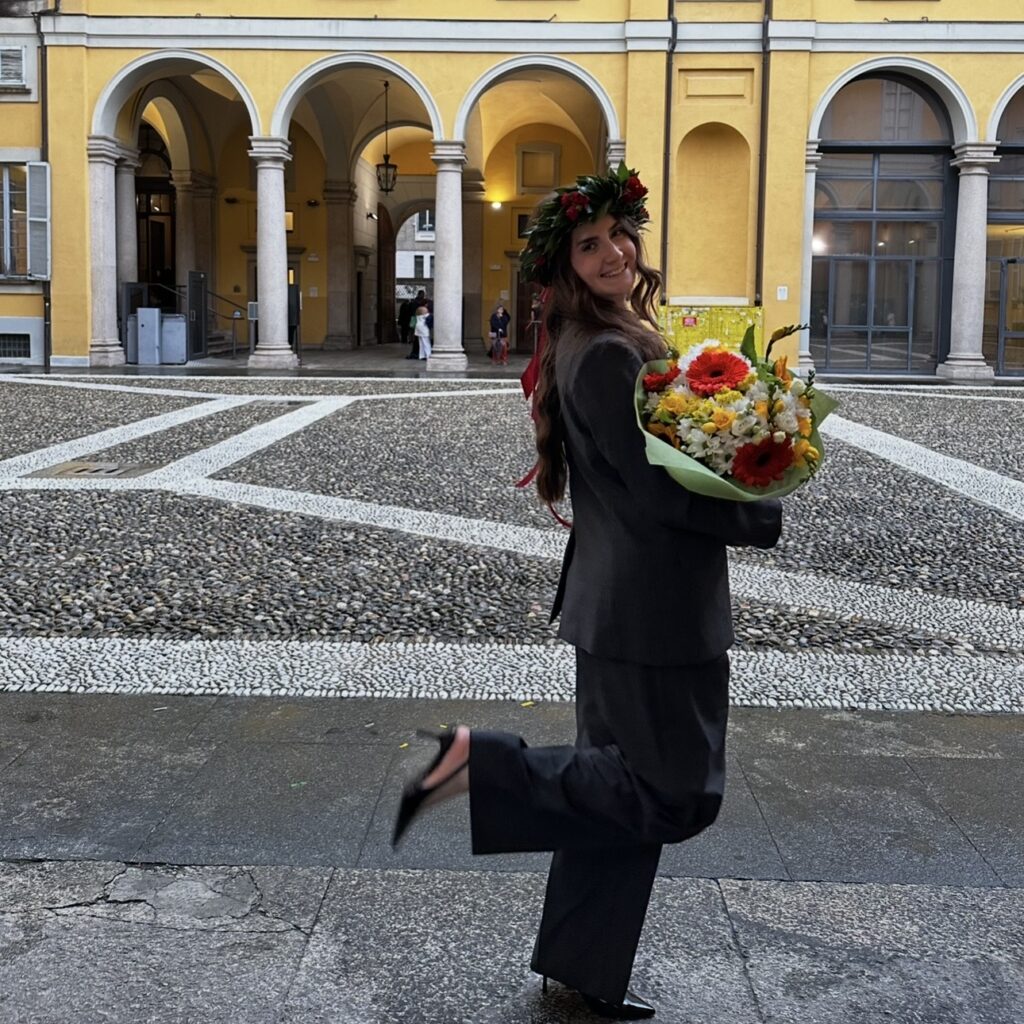
Louise Scriven is a guest blog contributor.
About me…
Hello to everyone reading this!
This is my first official time writing in the form of a blog, so bear with me! I’d like to start this off by introducing myself, because I feel as though when reading a piece of writing about someone’s personal experience with something it’s always nice to feel as though you know a bit about them beforehand.
My name is Louise, I’m 25, and I’ve recently moved back to my hometown in Manchester after having lived away from home for the last 6 years due to my university studies. In 2019 I moved to Nottingham where I studied History until 2023, graduating in the summer and moving to Milan in the autumn to complete a two-year long master’s course in Politics, Philosophy, and Public Affairs.
I have one sister, my mum is Italian, and my dad is British, hence the moving abroad. I’ve been in a relationship with my boyfriend for the past five years and I’m really lucky to have some wonderful friends in my life.
Unfortunately though, PMDD doesn’t care about your successes or your how many reasons and people you may have to feel happy about life, every month it still comes crashing down on you.
My PMDD JOURNEY
“Bad Periods” in Secondary school…
I guess I would say my first memories of realising I was someone who experienced ‘bad’ periods were about mid-way through secondary school. It was those awkward mid years where the girls were one-by-one getting their first period, and you would often chat and compare with your friends about how you found it, what safety you were using, and how much of a change you felt. I remember feeling confused when my friends couldn’t understand my complains about the excessive pain of my period cramps or the really heavy flow l was experiencing. This understandably came with a bit of embarrassment.
Over the next few years, I felt ashamed about how my experience of periods seemed extreme, I came to feel like | wasn’t strong enough as a woman when my friends or other women in my life talked about how they experienced their period. I have one memory of being out shopping with my friend, I’d say we were around 15 years old, and my period cramps got so unbearable I couldn’t physically walk any longer and had to sit down on the floor, my friend was so worried had no idea what to do (understandably so).
I ended up both throwing up multiple times and fainting in my boyfriend’s arms…
Looking back…
When I think back over the last 10 or so years of having my period, a few similar moments always stick out for me: the multiple times I was away with family and experienced cramps so excruciatingly bad that I was writhing in pain on holiday, having to miss out on some lovely experiences. Or the time only a few years ago where my cramps continued to be the most extreme form of pain I’d experienced for genuinely around 6 hours straight, so much so that I ended up both throwing up multiple times and fainting in my boyfriend’s arms whilst waiting for them to go away. These moments stick out to you, or at least to me, especially any time someone mentions periods.
Tracking symptoms
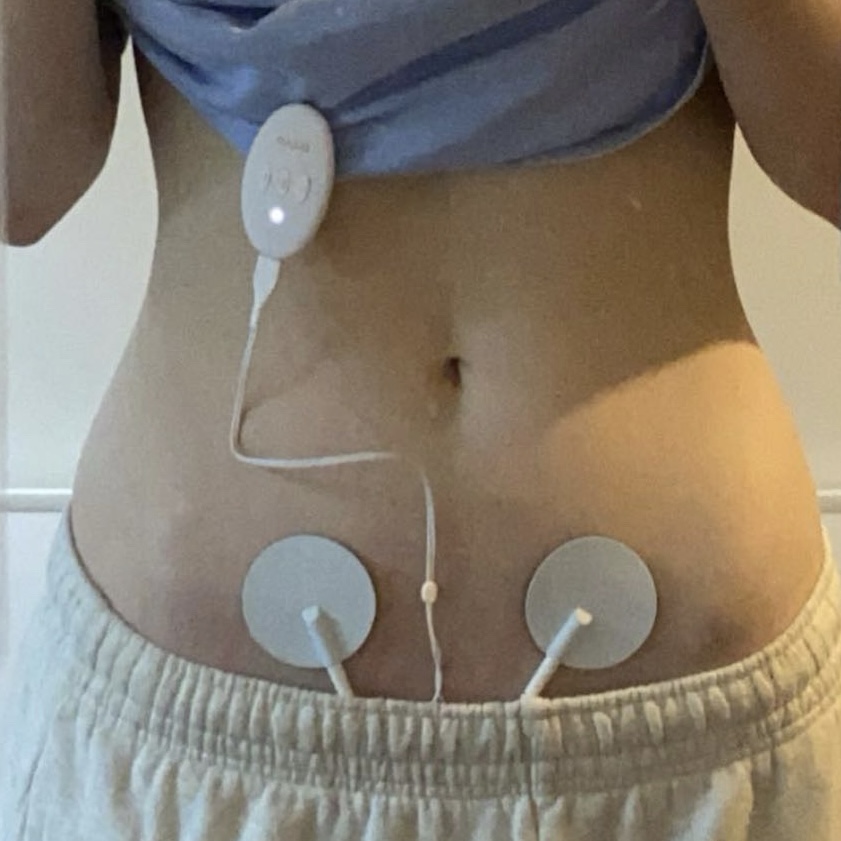
Because I saw myself as someone who would always experience bad periods, it took me a while to realise that what I had always known as my PMS symptoms were worsening each month. I was in my second year of university in 2020 when I began to notice that I was consistently experiencing 1-2 weeks of intense mood shifts, intermittently each month. When I would confide in my boyfriend and my friends about the symptoms I was noticing, none of the symptoms seemed to add up to anything and I couldn’t make sense of where they came from.
Eventually, I began to research. Researching has always been an activity that calms me, no matter the situation or task at hand, the more I feel l understand something, the more at ease I am – which is also why I felt so lost with the physical and mental symptoms that I couldn’t piece together.
I think it’s important to say that if I hadn’t have researched my symptoms, and felt so lost that I felt compelled to act in some way – any way – to understand more (especially feeling nervous about going to the doctors without any idea of what I could be experiencing, because part of what I was feeling was on a mental level) I don’t know when I would have realised have PMDD. I started with the mental symptoms and the recognition that it wasn’t a constant feeling, but a cyclical and reoccurring pattern. This immediately felt odd to me, because I couldn’t work out what health symptoms would behave in such a way.
I would say it took me a few months of consistent up and downs as well as looking back and attempting to understanding the times where I felt really awful, to understand that the feelings I was experiencing were occurring monthly. Not only this, but that my symptoms were progressively getting worse each time. I would experience depression and anxiety so severe I couldn’t physically pick myself up from my bedroom floor for hours, not even to make it to my bed.
I would spiral so quickly that I completely lost track of everything I had been doing day to day, losing so much of my time to moments where I couldn’t stop crying and experiencing panic attacks, to losing myself in thoughts of suicidal ideation. I don’t type these things lightly, in fact, I’m almost weary about admitting how severe my symptoms were. I guess I’m scared that I won’t be believed or be accused of exaggerating, as well knowing that I haven’t really admitted to many people just how bad I felt during that time.
Essentially, it got to the point for me of realising that if I didn’t look to understand why l was feeling what I was feeling, or even just contextualising what was going on, it was only going to get worse.
It could be PMDD…
The Mind charity page for PMDD was the first thing that came up for me when I searched my symptoms. It was my first time reading a list of PMDD symptoms and having a eureka moment, except it definitely wasn’t as exciting at that, more reaffirming if anything. It did feel like a lightbulb moment, but at the same time too good to be true – I felt unsure in myself that I was truly experiencing symptoms this bad, as if seeing them all listed together had made me doubt my own certainty of how much I was suffering. I was lucky to have a very supportive partner and group of friends that encouraged me to speak to the doctor about what I had read.
Now, going to the doctor ready with the sentence: ‘so I read online…’ can be a very daunting experience, but again I was lucky enough to find a doctor who listened to me and wanted to help me. She understood how I had been feeling and told me to start keeping a track of my symptoms, and that we will meet next month after she had done more research into PMDD in order to discuss treatment options.
I would just like to caveat to add that I understand that my experience of diagnosing PMDD on a medical level is very different to many others, and that so many people are not lucky enough to be met with immediate support or understanding. I do think it is so important to keep trying, I have had a few experiences in the past with doctors when I was trying to get help for how painful and heavy my periods were who were not as understanding, and I do believe it just takes one doctor who is willing to try to understand your symptoms to make a difference.
Eventually, we decided that the best option for me would be to start a course of antidepressants. As many of you reading this may know, the treatments for PMDD are not very extensive. If you look on the NHS website for PMDD (albeit the Welsh version as the NHS England site only has a page for PMS, with only a small mention of PMDD at the end – a blog for another day) the treatments include antidepressants, the pill, and induced menopause. Obviously, this is not very encouraging, and I found it can be quite a difficult barrier to overcome when first seeking help. The journey to diagnosing PMDD is often not a comfortable or joyous one, especially the part where you have no idea what is happening to your body and can’t make sense of such life-altering symptoms. Then, after finally being able to understand and begin to process what may be causing everything you’ve been feeling, you’re faced with an underwhelming set of treatment options. Induced menopause is for many reasons not a suggested initial treatment option, which really leaves you with three choices: antidepressants, the hormonal pill, or neither.
After researching the options myself and considering my current situation, I decided to opt for the antidepressants. There were many reasons for my choice, one being that part of my anxiety disorder (that I had been diagnosed with at 14, long before understanding what PMDD is) was health anxiety. At the same time I was coming to understand my PMDD diagnosis, the Covid-19 pandemic had been happening, and my health anxiety had been particularly bad throughout lock down. I had become sort of obsessed with understanding the natural processes of my body, such as being able to track my cycle through the natural changes your body has throughout each week. I was worried that taking the hormonal pill would interfere with this and I wouldn’t be able to feel sure of my bodies reproductive health.
Another reason was that most difficult to deal with symptom of my PMDD was the extreme depressive lows I was experiencing during the week and a half before my period. These lows were incredibly difficult to manage, often getting in the way of any plans I had for the day, or week. I admit I had reservations about how the pill would affect my mood due to stories l’ve heard from friends and general talk, and I was worried it would make my mood shifts worse or unpredictable.
I needed something to help manage those lows. I knew that nothing would cure my PMDD or even manage it so well that I would be symptom-free. My hope was that the antidepressants would be able to prevent the lowest moments of my PMDD, so that I would at least have a chance of being able to create sustainable lifestyle choices that allowed me to manage my PMDD each month. Luckily enough, that is what they did.
Over the years I have since increased my dosage due to various reasons, but l am thankful that they gave me the chance to begin supporting myself through PMDD. I have now been taking my antidepressants for around 5 years. Over this time my PMDD has certainly fluctuated, and I have definitely had some very low moments in that time, but what I can be certain of is that these low moments are not a certainty each month. I know it’s not a very predictable lifestyle, but find that if I really focus on practicing the habits that I find help manage my PMDD symptoms, I can somewhat avoid experiencing those extremely low moments. More importantly, and I know this is something many people living with PMDD will be familiar with, I find an incredible sense of comfort in knowing exactly why I experience intense mood swings, depressive lows, heightened anxiety, brain fog, exhaustion, joint pain, suicidal ideation and more. This is not to say l don’t find it incredibly frustrating each month when my mindset switches and when I feel that I have little control over how I feel or how often I get to trust my emotions, but at least I can contextualise it.
There is so much more to say about my experience and observations of PMDD, but I am aware I have rambled on for a while now. I am very grateful for the opportunity I have been given to be able to tell my own story of PMDD, or at least the realisation of it! Over the last couple of years, I have noticed that slowly there is more and more talk of PMDD and more awareness of its existence as a disorder. Charities such as The PMDD Project are so important to supporting not only individuals living with PMDD but also helping to raise awareness and encourage even more research into it. I do feel very hopeful that this trend will continue to grow.